Задание №15748.
Развернутое письменное высказывание. ЕГЭ по английскому
Выберите только ОДНО из двух предложенных заданий (38.1 или 38.2), укажите его номер в БЛАНКЕ ОТВЕТОВ №2 и выполните согласно данному плану. В ответе на задание 38 числительные пишите цифрами.
38.1 Imagine that you are doing a project on what countries are popular among tourists. You have found some data on the subject – the results of the opinion polls (see the table below).
Comment on the data in the table and give your personal opinion on the subject of the project.
Write 200–250 words.
Use the following plan:
– make an opening statement on the subject of the project;
– select and report 2–3 facts;
– make 1–2 comparisons where relevant and give your comments;
– outline a problem that can arise with traveling and suggest a way of solving it;
– conclude by giving and explaining your opinion on the importance of visiting other countries.
38.2 Imagine that you are doing a project on what social networks are the most popular. You have found some data on the subject (see the diagram below).
Comment on the data in the diagram and give your personal opinion on the subject of the project.
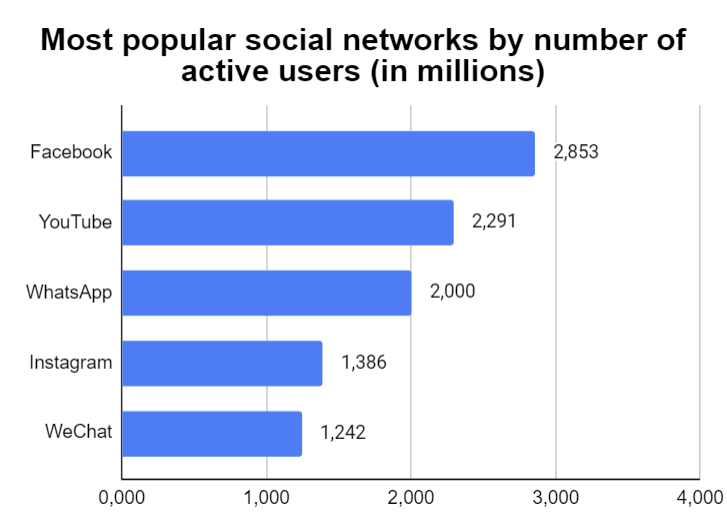
Write 200–250 words.
Use the following plan:
– make an opening statement on the subject of the project;
– select and report 2–3 facts;
– make 1–2 comparisons where relevant and give your comments;
– outline a problem that can arise with using social networks and suggest a way of solving it;
– conclude by giving and explaining your opinion on the role of social networks in our life.
Пояснение:
Ознакомьтесь с рекомендациями М. В. Вербицкой по выполнению задания 40: читать.
Проверьте себя при помощи дополнительной схемы оценивания:
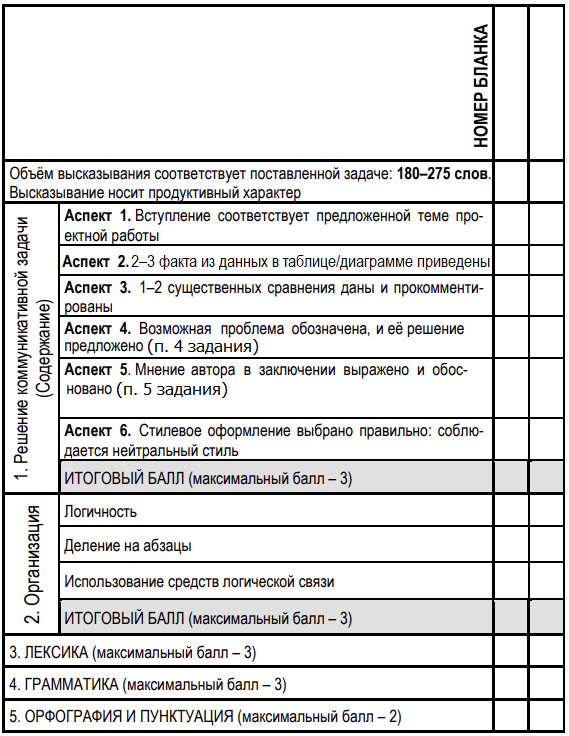
Источник: englishiseasy
Сообщить об ошибке
Тест с похожими заданиями
Развернутое письменное высказывание. ЕГЭ по английскому
Выберите только ОДНО из двух предложенных заданий (38.1 или 38.2), укажите его номер в БЛАНКЕ ОТВЕТОВ №2 и выполните согласно данному плану. В ответе на задание 38 числительные пишите цифрами.
38.1 Imagine that you are doing a project on what countries are popular among tourists. You have found some data on the subject – the results of the opinion polls (see the table below).
Comment on the data in the table and give your personal opinion on the subject of the project.
| The opinion poll question: Which country would you like to visit the most? | |
| Country | Number of respondents (%) |
| Paris | 35 |
| London | 20 |
| Dubai | 10 |
| Singapore | 5 |
| New York | 30 |
Write 200–250 words.
Use the following plan:
– make an opening statement on the subject of the project;
– select and report 2–3 facts;
– make 1–2 comparisons where relevant and give your comments;
– outline a problem that can arise with traveling and suggest a way of solving it;
– conclude by giving and explaining your opinion on the importance of visiting other countries.
38.2 Imagine that you are doing a project on what social networks are the most popular. You have found some data on the subject (see the diagram below).
Comment on the data in the diagram and give your personal opinion on the subject of the project.
Write 200–250 words.
Use the following plan:
– make an opening statement on the subject of the project;
– select and report 2–3 facts;
– make 1–2 comparisons where relevant and give your comments;
– outline a problem that can arise with using social networks and suggest a way of solving it;
– conclude by giving and explaining your opinion on the role of social networks in our life.
Пояснение:
Ознакомьтесь с рекомендациями М. В. Вербицкой по выполнению задания 40: читать.
Проверьте себя при помощи дополнительной схемы оценивания:
Источник: englishiseasy
Сообщить об ошибке
Тест с похожими заданиями